
Buy BIMI Certificate for Brand-Verified Emails

Adopt the BIMI Standard with Certificate-Backed Inbox Trust

BIMI lets mailbox providers display verified brand logos only after strict authentication and identity validation through BIMI certificates (VMC or CMC).

  • Stand out with a verified logo (not just a sender name)
  • Reduce BEC risk with DMARC-aligned BIMI
  • Reinforce brand recognition across BIMI-enabled inboxes
  • Add a certificate-backed trust layer to your email identity

Get BIMI Certificate at the Best Price

BIMI Certificates

Why BIMI Matters & Why Brands Are Buying BIMI Certificates

Email authentication has existed for years, but it has largely remained invisible to recipients. While SPF, DKIM, and DMARC validate sending domains, users still rely on visual cues to decide whether an email feels trustworthy. The BIMI standard was created to solve this gap.

With a BIMI certificate, brands can
Verified LogoDisplay a verified logo in BIMI-enabled inboxes
Brand LogoPrevent brand logo impersonation and spoofing
Reinforce TrustReinforce trust for transactional and marketing emails
Email SecurityAlign email security with brand recognition
BIMI connects technical email authentication with visible brand trust, making sender identity both verifiable and recognizable.
What Is BIMI?

What Is BIMI (Brand Indicators for Message Identification)?

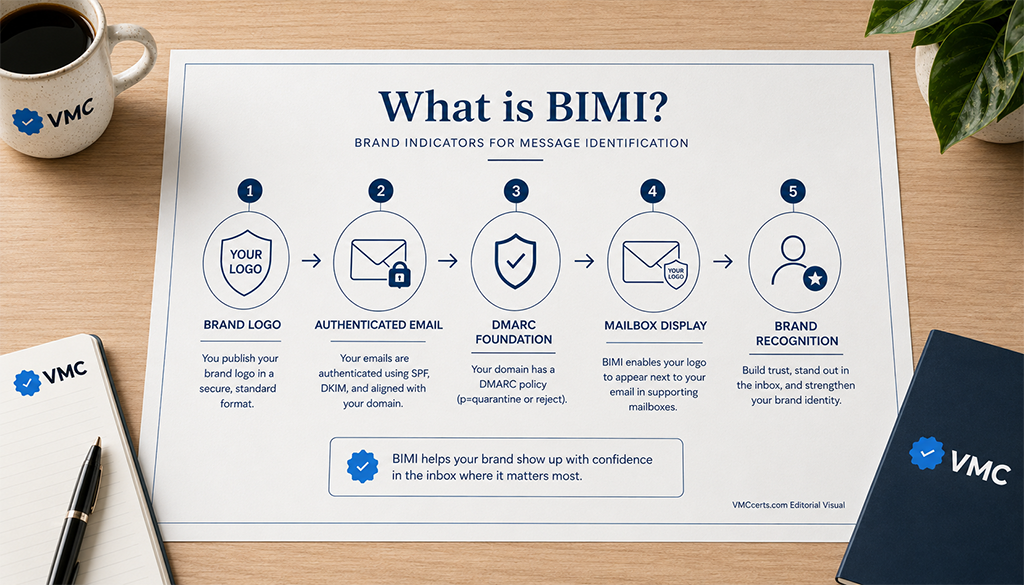
BIMI is an open email standard that allows mailbox providers to display a sender’s verified logo only after strict authentication and identity checks are met.

BIMI works alongside existing protocols

  • SPF for sender authorization
  • DKIM for message integrity
  • DMARC for domain alignment and enforcement

Once these checks succeed, BIMI allows mailbox providers to verify brand ownership before showing a logo.

BIMI is governed by published specifications and adopted by major mailbox providers as part of broader efforts to reduce phishing, spoofing, and brand impersonation.

How BIMI Works

How BIMI Works (In Practice)

BIMI follows a strict, security-first evaluation process. Logo display is conditional, not guaranteed.

At a high level, the BIMI process works as follows:

  1. Email passes SPF and DKIM checks
  2. DMARC confirms alignment and enforcement
  3. Mailbox provider looks for a BIMI DNS record
  4. BIMI record references a logo and certificate
  5. BIMI certificate verifies brand ownership
  6. Logo is displayed only if all checks pass

If any step fails, BIMI is bypassed automatically. This all-or-nothing model is what preserves the integrity of the BIMI standard.

What is a BIMI Certificate?

A BIMI certificate cryptographically validates brand ownership, ensuring logos are displayed only for authenticated and authorized senders. It is a digital certificate issued by a trusted Certificate Authority that verifies the association between:

  • An organization
  • Sending domain
  • Brand logo

The certificate ensures that the logo referenced in the BIMI record belongs to the authenticated organization and cannot be reused or impersonated by another sender.

From a security perspective, the BIMI certificate is what transforms a logo into a verifiable identity marker. Without it, mailbox providers cannot safely confirm logo ownership making certificate-based validation a core requirement of BIMI certification.

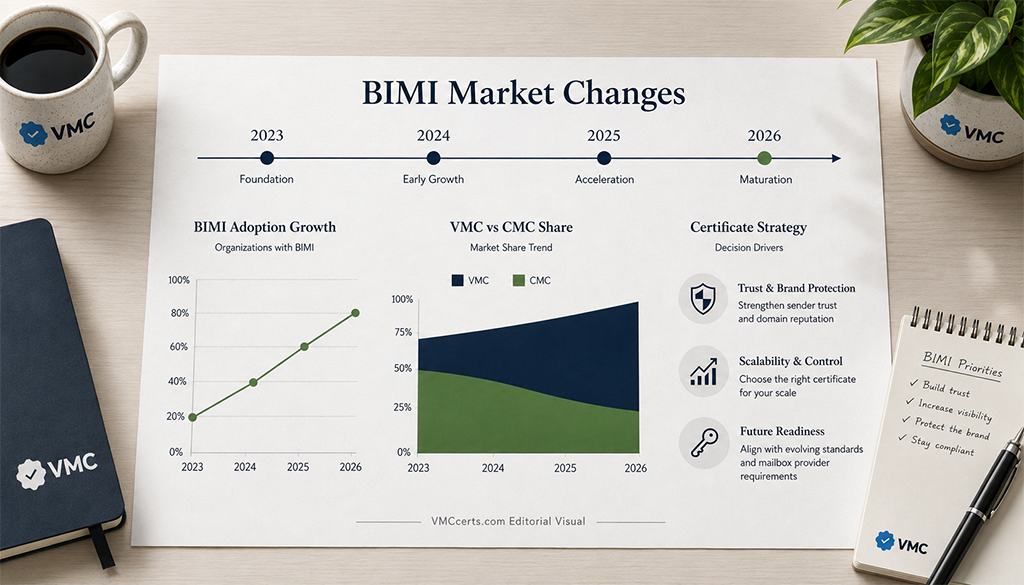
Types of BIMI Certificates

Organizations can choose from two types of BIMI certificates based on their brand and trademark status.

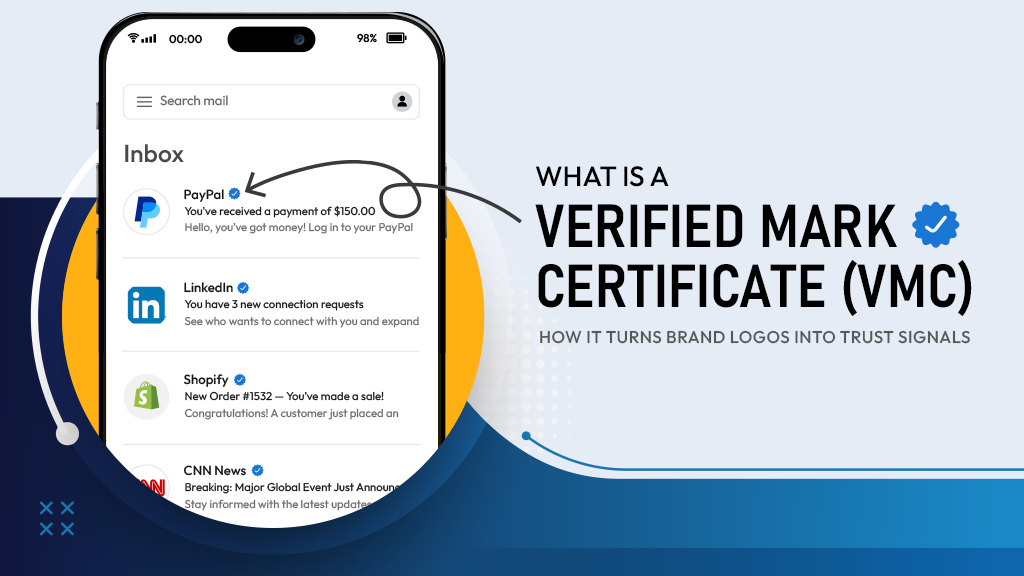
Verified Mark Certificate (VMC)

A Verified Mark Certificate (VMC) is designed for organizations with a registered trademark.

  • Trademarked logo required
  • Highest level of brand verification
  • Mandatory for Gmail BIMI support
  • Preferred by enterprises and regulated industries
VMC use case:

Banks, SaaS brands, global companies

Get Started with VMC

Common Mark Certificate (CMC)

A Common Mark Certificate (CMC) enables BIMI adoption for organizations without a registered trademark.

  • Trademark not mandatory
  • Organization identity validated
  • Lower entry point for BIMI adoption
  • Supported by selected mailbox providers
CMC use case:

SMBs, growing brands, internal email domains

Get Started with CMC

BIMI Email Authentication and Security Impact

BIMI rewards domains that follow authentication best practices rather than bypassing them. Security benefits include:
Brand SpoofingReduced brand spoofing attempts
Lower PhishingLower phishing success rates
Sender ReputationStronger sender reputation signals
Recipient ConfidenceIncreased recipient confidence

BIMI Certificate Cost: What You’re Really Paying For

The actual cost of BIMI implementation comes from the certificate required to display your logo in inboxes – not from BIMI as a protocol.

Compare VMC & CMC Pricing

BIMI pricing is influenced by four practical factors:

  • Certificate TypeVMC (Verified Mark Certificate) or CMC (Common Mark Certificate)
  • Trademark StatusRequired for VMC, optional for CMC
  • Certificate Authority (CA)Pricing varies by the issuing Certificate Authority
  • Validation ScopeOrganization identity checks and logo verification

BIMI Requirements at a Glance

BIMI implementation requires all components to be correctly aligned. Partial configuration does not activate BIMI.

To implement BIMI, organizations must have:
  • DMARC policy set to enforcement(p=quarantine or p=reject)
  • Properly aligned SPF and DKIM authentication
  • A BIMI-compliant SVG logo
  • A published BIMI DNS record
  • A valid BIMI certificate (VMC or CMC)

Each requirement serves a specific security purpose within the BIMI standard.

How to Set Up and Implement BIMI

BIMI implementation follows a structured, standard-driven process.

Setup Guide

1
Enforce Email Authentication

Ensure SPF, DKIM, and DMARC alignment.

2
Prepare BIMI Logo

Logo must meet BIMI SVG format requirements.

3
Purchase BIMI Certificate

Choose VMC or CMC based on eligibility.

4
Publish BIMI Record

Connect domain, logo, and certificate via DNS.

5
Monitor Display

Logo visibility depends on mailbox provider policies.

Supported Mailbox Providers

BIMI support continues to expand across mailbox providers.
Mailbox providers control logo display rules. BIMI enables eligibility, not guaranteed placement.

Frequently Asked Questions (FAQs)

What is BIMI certification?

BIMI certification refers to validating brand identity through a BIMI certificate so logos can be securely displayed in supported inboxes.

Is a BIMI certificate mandatory to implement BIMI?

BIMI can technically be implemented without a certificate, but most major mailbox providers require a BIMI certificate (VMC or CMC) before displaying your brand logo in the inbox. Without it, BIMI records may be ignored or only partially supported.

Is DMARC required for BIMI?

Yes, to set up BIMI, your domain must have:

  • DMARC policy set to quarantine or reject
  • Proper SPF and DKIM alignment

BIMI is built on top of DMARC enforcement and cannot function independently.

What logo format is required for BIMI?

BIMI requires a very specific logo format:

  • SVG
  • Square aspect ratio
  • SVG Tiny PS profile
  • No external references, scripts, or gradients

Incorrect SVG formatting is one of the most common causes of BIMI failures.

How long does it take to get a BIMI certificate?

Issuance time depends on certificate type and readiness:

  • CMC: Faster issuance if organizational details are ready
  • VMC: Longer timeline due to trademark verification

Timelines depend on DMARC readiness, logo preparation, and certificate issuance.

Does BIMI improve email deliverability?

Indirectly, yes. BIMI strengthens sender trust and brand recognition, which can positively influence:

  • Open rates
  • User engagement
  • Spam complaint reduction

However, BIMI is not a deliverability fix by itself – it complements strong email authentication practices.

Can BIMI work without a trademark?

Yes, through a Common Mark Certificate (CMC), depending on mailbox provider support.

How much does a BIMI certificate cost?

BIMI certificate pricing varies based on:

  • Certificate type (VMC or CMC)
  • Certificate authority
  • Validation level
  • Term length

Most providers offer transparent pricing with multi-year options, and the cost is typically positioned as a brand trust investment rather than a compliance expense.